
Tree Risk Assessment

Independent Tree Risk Assessments in Central Florida
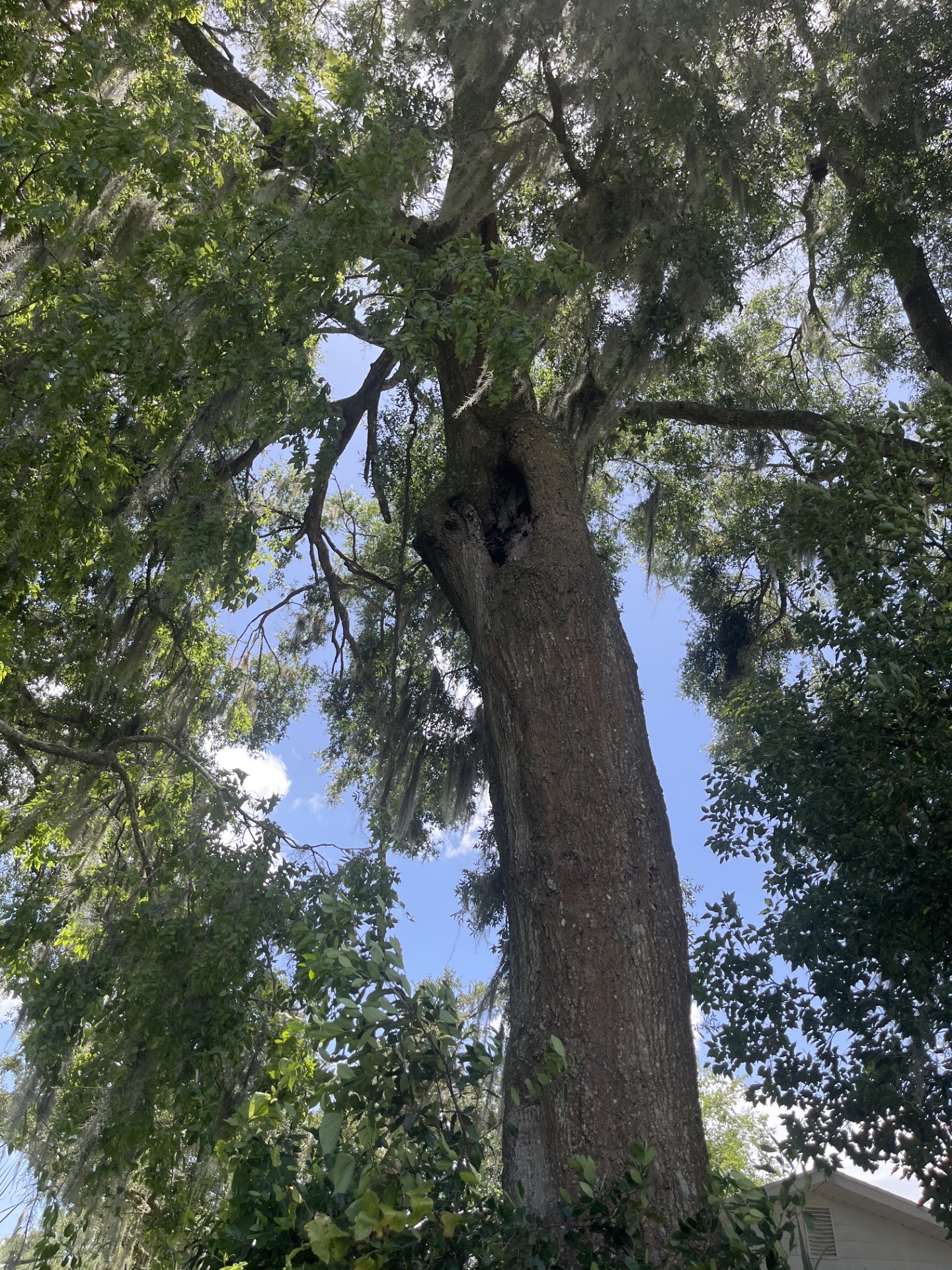
Flying Blind is Risky
Some tree defects are immediately visible as large holes in the tree, open cracks in the trunk, broken and hanging branches, or a leaning trunk with soil cracking and movement. These obvious defects can make it easier for a property owner to recognize when it's time to call a tree service provider for pruning or removal.
Without periodic evaluation by an experienced arborist, property owners are often making tree management decisions based only on what they can see. By the time some conditions become obvious, the available options may be more limited. Regular assessments provide a better understanding of how trees and site conditions are changing over time, allowing concerns to be identified, documented, and managed earlier.
At ArborManagers™, we provide comprehensive independent Tree Risk Assessments for homeowners, property managers, HOAs, and other property owners throughout Central Florida. Our onsite assessments are performed by an ISA Certified Arborist®, and provide objective findings and practical recommendations that help you recognize the risk before it becomes an emergency.
Whether you have an immediate concern about your tree or want to establish regular risk monitoring for your property, we help you make informed decisions about tree risk and safety.
Request AssessmentWhat Is a Tree Risk Assessment?
A Tree Risk Assessment is a systematic evaluation used to assess the risk associated with the potential failure of a tree or tree part. It considers the tree and its condition, the likelihood of failure, the likelihood of impacting a target, and the consequences if failure occurs.
The purpose is not simply to identify defects. It is to provide information that can be used to make informed decisions about managing tree risk. A Tree Risk Assessment evaluates the level of risk associated with a tree; it does not certify a tree as completely "safe." All trees carry some degree of risk, and conditions can change over time.
Questions about Tree Risk Assessments? See answers to common questions about tree safety, leaning trees, structural defects, assessment methods and management decisions on our FAQ page.
What Is Evaluated During a Tree Risk Assessment?
A Tree Risk Assessment starts with an onsite evaluation of the tree and surrounding property by an ISA Certified Arborist. The arborist examines the tree for conditions that could contribute to failure, and considers what could be affected if the tree were to fail. Those findings are used to evaluate the level of risk associated with the tree and determine what action, if any, is recommended.
Tree health and tree risk are related, but they are not the same thing. A tree with a full, green canopy can still have structural conditions that affect its likelihood of failure, and a declining tree is not automatically an unacceptable risk. If your primary concern is whether a tree or branch could fail and cause harm or damage, a Tree Risk Assessment is the more relevant evaluation.
Lean and Other Structural Characteristics
Not every leaning tree is unsafe. Some trees develop a lean while growing and remain structurally stable for many years. A new lean, an increasing lean, or changes in the soil or roots around a leaning tree may warrant closer attention, but the significance of a lean depends on more than the angle of the tree. Its history, root condition, structural response, site conditions, and potential targets all factor into the evaluation.
The same is true of cracks, cavities, decay, and other visible defects: their location, extent, and the surrounding wood and structure of the tree all matter. A visible defect is a reason to have a tree evaluated, but it isn't by itself proof that a tree is unsafe or needs to be removed.
When Is a Tree Risk Assessment Needed?
Tree risk assessments are relied upon across a range of situations including:
- Evaluating trees near buildings, roads, utilities, or frequently occupied areas
- Supporting arborist reports and letters for permitting or municipal review
- Responding to municipal or agency inquiries about tree condition
- Planning property improvements or site changes where trees are a factor
- Determining whether mitigation, monitoring, or removal should be considered
- Legal and insurance matters involving tree failure or property damage
- Real estate transactions where tree condition affects value or liability
- HOA disputes or approval processes involving tree condition
Whether a permit is required to remove a tree depends on your property type, your local jurisdiction, and whether the conditions of Florida Statute 163.045 are met. For residential property owners the statute may eliminate the permit requirement entirely when proper documentation exists; commercial properties and development projects are subject to local permitting requirements.
Professional Judgment, Not a Predetermined Outcome
A Tree Risk Assessment can help determine whether removal is an appropriate risk-management option, but removal is not the predetermined outcome. Depending on the findings, recommendations may include no immediate action, monitoring, additional assessment, pruning or other mitigation, changes involving potential targets, or removal.
A tree risk assessment is the professional evaluation process during the onsite examination of a tree, its condition, and its risk factors. An arborist report is the documentation that results from that process, prepared for a specific purpose such as permitting, municipal review, or legal matters. In many cases both are produced together.
Case Studies
-
Tree Risk Assessment and Letter Removes Permit Requirement
Case StudyThe Challenge
The City of Tampa required a residential property owner to obtain a permit to remove a Laurel Oak near their home. The homeowner called ArborManagers for an independent tree risk assessment.
The Assessment
ArborManagers evaluated the tree for signs of disease, damage, and structural defects that could pose a risk to people or property. Considering the condition of the tree, identified defects, likelihood of failure and impact, and the consequences to nearby targets, the overall risk was determined to be unacceptably high.
Due to the maturity, height and proximity of the tree to the home, it could not be pruned to below moderate risk levels, using recognized industry standards and best management practices, without subjecting the tree to long-term health and structural issues.
The Permit Requirement Was Removed
After reviewing the tree risk assessment and arborist letter, the City of Tampa removed the requirement for the permit.
The Result
A single tree risk assessment and arborist letter removed a permit requirement that would have required a permit fee and replacement trees.
Why an Independent Assessment Matters for Tree Permit Requirements
Permit requirements don't necessarily take into account tree and site-specific factors, and the possible urgency of the situation. An independent tree risk assessment and letter gives property owners the documentation needed to bypass or request reconsideration of a permit requirement.
Answers to Tree Risk and Safety Questions
Do I need an assessment if my tree looks ok?
Trees can appear healthy but due to age, species, recent storms, or site activities can have issues that aren't obvious to an untrained arborist. The absence of visible problems does not necessarily mean conditions affecting risk are not present.
If you're unsure whether your tree needs an assessment, an independent ISA Certified Arborist at ArborManagers can help you determine the appropriate next step.
A tree company told me my tree needs to be removed. Should I get a second opinion?
If you are uncertain about a recommendation to remove a tree, particularly a mature or valuable tree, an independent evaluation can provide additional information before you make a decision.
An independent ISA Certified Arborist who is not performing the removal can evaluate the tree without having a financial interest in whether the tree is ultimately retained or removed.
Should I have my tree checked after a storm?
If a tree has been damaged during a storm, has developed a new lean, has broken or hanging branches, has visible root or soil movement, or has otherwise changed in a way that concerns you, an onsite evaluation may be appropriate.
Some storm-related damage is readily visible, while other changes may be less obvious. An evaluation can help determine whether the tree requires additional assessment, immediate action, or continued monitoring.
What should I do if I am concerned about a tree right now?
Avoid placing yourself beneath or immediately around a tree or branch that you believe may be unstable. Do not attempt to inspect elevated portions of the tree or disturb damaged roots, hanging branches, or other potentially unstable tree parts yourself.
Contact a qualified arborist and explain what you have observed so the appropriate level of evaluation can be determined.
Deliverables
Tree risk assessments are documented in a clear written format suitable for reference, planning, and recordkeeping. The scope and level of detail are scaled to the site and the trees being evaluated.
Assessment time varies depending on the number of trees, site conditions, accessibility, the level of assessment needed, and whether written documentation is required for permitting, insurance, or another intended use.
Call us today at 352-414-2454 to discuss your situation before taking any action.